Burnout and overwhelm
Feeling strung out, flat or permanently behind, even when the week looks manageable from outside. We look at what you have been carrying, what it costs you, and what you have learned to ignore.
Counselling & Psychotherapy — Central Bristol and online
You don’t need a tidy explanation of what is wrong. I work with people who feel strung out, lost or dissatisfied with their lives, and are not sure why.
01 — The questions
These are the ones I hear most often. They are worth taking seriously, even when nothing looks wrong from the outside.
Anxiety does not always follow the facts of a life. It often comes from beliefs formed long before now — about what you must achieve, or who you must keep happy — and therapy is a place to look at those directly rather than argue with the feeling.
Friction with a partner, a parent or a colleague usually has a history. We look at what you learned to expect from people, what you find hard to say, and how those patterns show up now.
This is not answered by thinking harder. Over time you get better at recognising what you feel, what you need and what you want, and at trusting your own judgement about it.
Success can feel hollow when it was built to earn approval rather than to express something of your own. Part of the work is separating what you want from what you were told to want.
By practising boundaries, and by noticing the inner critic for what it is. That is slow work, and it tends to change how you make decisions rather than arriving as a single realisation.
02 — Work with me
The goal isn’t to become a different person. It’s to build a life that feels more honest, and therefore more worthwhile.
Feeling strung out, flat or permanently behind, even when the week looks manageable from outside. We look at what you have been carrying, what it costs you, and what you have learned to ignore.
Tension, conflict or a quiet dissatisfaction with a partner, family, friends or colleagues. Often the pattern is older than the relationship in front of you.
A move, a change of work, a loss, a decision you keep postponing — or the quieter recognition that the life you built is not the one you want.
I don’t promise a particular outcome. What clients often describe, after some months of weekly work, is a shift in how they stand in relation to themselves.
03 — About Miriam
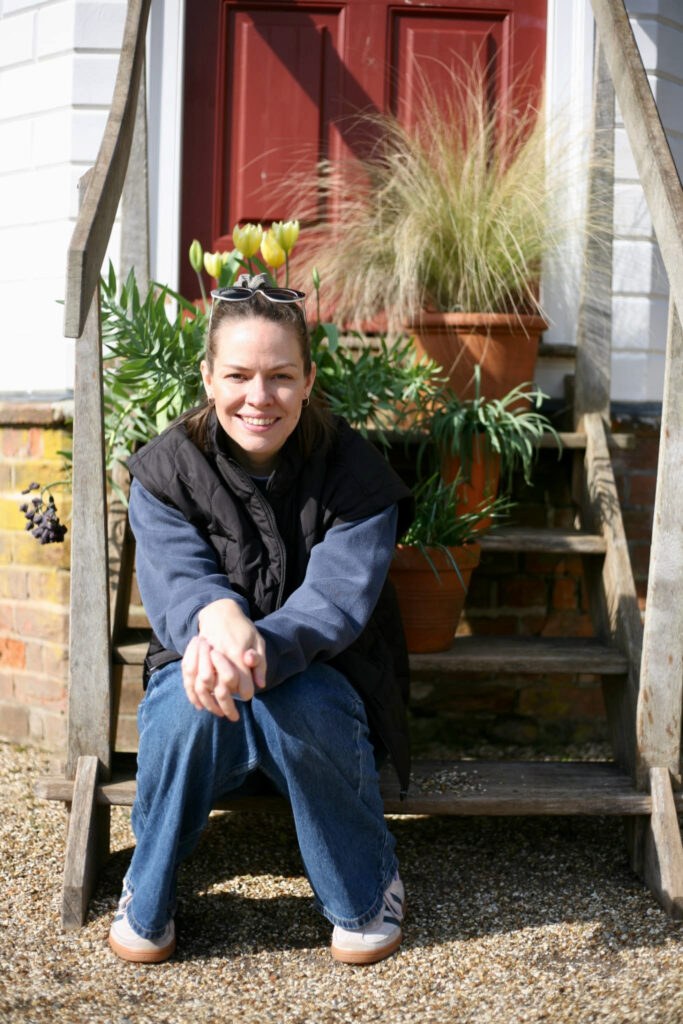
For many years I thought I could intellectualise my way through the pain and strain of life.
I began training as a therapist at 22. It gave me an incredibly helpful theoretical blueprint for understanding myself, but it wasn’t a shortcut to processing my feelings, or to seeing how my sub-conscious beliefs were shaping my everyday — and keeping me in a loop of depression and anxiety.
To do that, I had to commit to my own therapy. It wasn’t always a comfortable process, and it took time. It gave me ownership over my own life: boundaries, a different relationship with my inner critic, more security in my relationships, and the nerve to live by my own values rather than other people’s.
That is why I remain so passionate about the job. I work with clients in central Bristol and online, and I am a registered member of the British Association for Counselling and Psychotherapy, working to their Ethical Framework.
It’s enough to simply have recognised that something feels off.
04 — Practical
Sessions take place at Orchard Street Therapy Rooms in central Bristol, or online. The free 15-minute call comes before any of this.
05 — FAQ
If yours isn’t here, ask it on the free call. Nothing needs to be decided in advance.
You may have an inkling that, with some professional input, you could finally work out why you feel the way you feel. You may equally feel sceptical about whether counselling helps at all. Either is fine. The initial consultation is where you can ask those questions and decide whether working together is the way forward.
Yes. There are some necessary limits to confidentiality, and I will explain them in full when we begin. I welcome any questions about them.
There is no set number. I suggest a minimum commitment of 8 sessions after the initial assessment, which allows time for the therapy to take shape and for you to discover what is at the heart of the challenges you face. I usually work with clients for around 6 months to 3 years.
06 — Contact
It is a short conversation, not an assessment. You can say as much or as little as you like about why you are getting in touch.
Phone
In person or online
Orchard Street Therapy Rooms
11 Orchard Street
Bristol BS1 5EH
or online, once a week